

But how can grape-derived molecules influence cellulite, a condition that goes far beyond aesthetics and involves both physical discomfort and psychological impact?
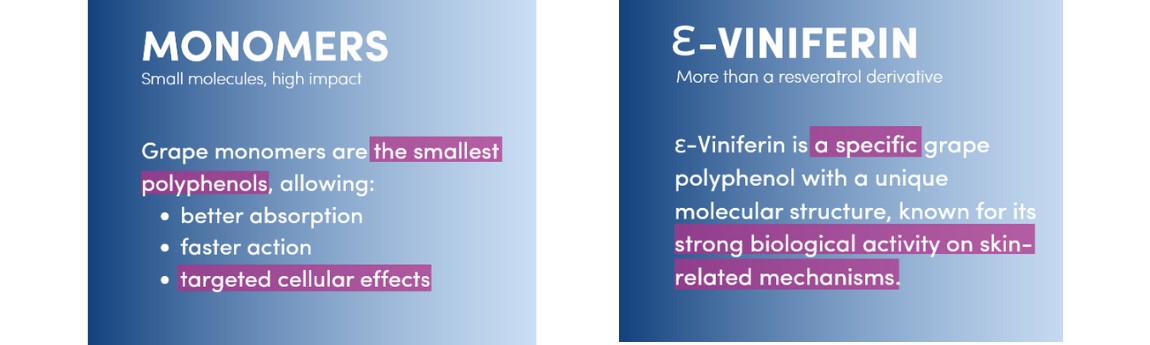
Polyphenols are a broad family of plant compounds, with over 8,000 molecules identified to date. Among them, ε-viniferin and flavanol monomers stand out for their high bioactivity, allowing them to act efficiently at the cellular level.
ε-Viniferin: More Than a Resveratrol Derivative
ε-Viniferin is a specific grape polyphenol with a unique molecular structure. Although related to resveratrol, it demonstrates distinct biological activity, particularly on skin-related mechanisms.
Its key properties include:
– strong antioxidant activity
– support of tissue integrity
– contribution to improved blood circulation
These mechanisms are directly relevant to the biological processes involved in cellulite.
Flavenol Monomers: Small Molecules, High Impact
Flavenol monomers are the smallest grape polyphenols. Their low molecular weight allows:
– better absorption
– faster biological action
– targeted cellular effects
They are especially valued for:
– supporting microcirculation
– protecting collagen fibers
– enhancing overall skin vitality and smoothness
To quote a recently published study, Cellulite is a widespread cosmetic concern, affecting 80 to 98% of post-pubescent women. Cellulite is not simply a matter of fat accumulation. It is a complex, multifactorial condition involving both physical and psychological dimensions.
Physical consequences of cellulite
From a physiological standpoint, cellulite is associated with:
– Impaired microcirculation
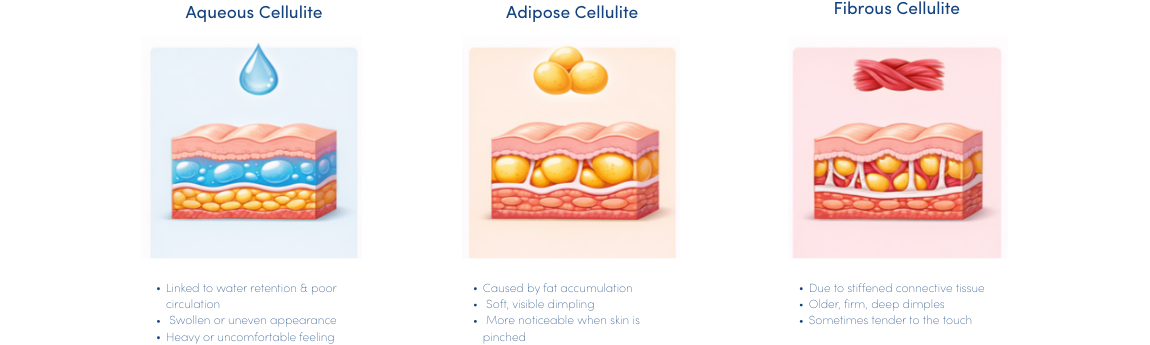
Reduced blood and lymphatic flow can lead to water retention, swelling, and a feeling of heaviness, particularly in the legs.
– Adipocyte hypertrophy
Enlarged fat cells exert pressure on surrounding tissues, contributing to uneven skin texture.
– Connective tissue alterations
Collagen fibers may stiffen and lose flexibility, creating the characteristic “orange-peel” appearance.
– Local discomfort
Some forms of cellulite are associated with tenderness, reduced comfort, or sensitivity to pressure.
These physical manifestations explain why cellulite can be accompanied not only by visible changes, but also by sensations of discomfort and heaviness.
Psychological and emotional impact
Beyond its physical effects, cellulite has a measurable psychological impact. Human research highlights that women with visible cellulite often report:
– reduced body confidence
– Physical insecurities
– discomfort wearing certain clothes
– a negative perception of their body image
– lower overall well-being
Not only physical changes, but also self-perceived outcomes, including confidence, comfort, and quality of life, underlining that cellulite is both a skin condition and a well-being concern.
Because cellulite involves multiple biological and emotional dimensions, effective solutions must go beyond a single mechanism. Viniferin and polyphenol monomers offer a dual, complementary approach.
Supporting microcirculation and fluid balance
Both ε-viniferin and grape monomers help support microcirculatory function. Improved blood flow and fluid exchange can contribute to:
– reduced water retention
– improved toxin elimination
– decreased sensation of heaviness
– improved comfort in affected areas
This mechanism is particularly relevant for cellulite associated with swelling and poor circulation.
Antioxidant protection and tissue quality
Oxidative stress weakens collagen and connective tissue structure. Thanks to their strong antioxidant activity, viniferin and monomers help:
– protect collagen fibers
– preserve skin elasticity
– improve the visual smoothness of the skin
A more resilient connective tissue translates into a more even skin surface.
Acting at the cellular level for visible and perceived benefits
By acting at the cellular and tissue level, these grape-derived molecules help improve not only the visible appearance of cellulite, but also how the body feels. This aligns closely with real-world observations showing improvements in:
– perceived orange-peel appearance
– physical comfort
– sensations of lightness
– self-confidence and well-being
Cellulite involves multiple mechanisms, from microcirculation to tissue quality and even psychological comfort. To address these comprehensively, Celluvine™ combines flavanol monomers and ε-viniferin into a daily nutraceutical format designed to act from within while supporting visible skin improvements.
Celluvine™: A Nutricosmetic Backed by Data
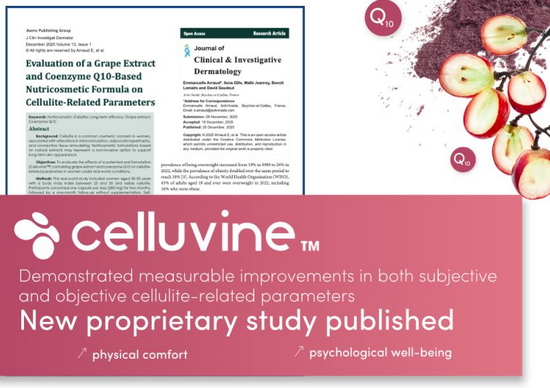
Celluvine™ delivers a standardized grape extract rich in flavanol monomers and ε-viniferin formulated with coenzyme Q10 and vitamin C. A three-month clinical study showed meaningful improvements in both physical signs of cellulite and self-perceived well-being.Key Findings from the Study
After daily supplementation with Celluvine™:
– Orange-peel appearance decreased by 22%
– Water retention sensations improved by 25%
– Physical discomfort related to cellulite decreased by 22%
– Self-confidence increased by 56%
– Overall body well-being scores improved by 61%
– Sensation of lightness nearly doubled (+98%)
These outcomes were seen after just two months of consistent use and were generally maintained through the three-month period of the study.
Importantly, participants also showed objective changes in body composition:
– Body weight decreased by 2.3 kg on average
– Body fat percentage reduced by 12.4%
– Reductions were also measured in key circumferences (waist, hips, thighs)
What makes Celluvine™ especially compelling is its twin impact on:
– Physical sensations (e.g., heaviness, discomfort, water retention)
– Psychological well-being (e.g., confidence, body insecurities)
The real-world data clearly show that women taking Celluvine™ not only saw measurable changes in appearance and composition, but also reported significant improvements in how they felt physically and emotionally, from enhanced self-confidence to a greater sense of lightness and overall body well-being.
Read the full study here
ε-Viniferin and flavanol monomers are newly recognised for their effects on cellulite. By acting on microcirculation, tissue integrity, oxidative stress, and self-perception, they offer a comprehensive approach to improving the appearance of cellulite, addressing both what we see and how we feel.
Two grape molecules. One beauty mission:
supporting smoother-looking skin, improved comfort, and renewed body confidence through science-driven innovation.